

Life Insurance for Business Owners
Whether you're buying a business, building one from the ground up, or planning for the future, we'll help design a life and disability insurance strategy that protects your business, your family, and everything you've worked to build.

Why Business Owners Need Life Insurance
For business owners, life insurance protects much more than a paycheck.
Most people think of life insurance as a way to replace income for a family. While that's certainly important, business owners often have additional responsibilities that can affect business partners, employees, lenders, customers, and the future of the company itself.
Whether you're buying a business, building one from the ground up, or growing an established company, the right life insurance strategy can help protect your investment, provide financial stability during uncertain times, and preserve everything you've worked so hard to build.
Every business is different, but the situations below are some of the most common reasons business owners use life insurance as part of a broader life insurance strategy.
When Business Owners Need Life Insurance
Buying a Business
Protect one of the largest investments you'll ever make with a life insurance strategy designed around the purchase, financing, and ownership structure.
SBA Loans
Many SBA loans require life insurance—and sometimes disability insurance—as part of the approval process. We'll help you meet the lender's requirements without purchasing unnecessary coverage.
Business Financing
When financing is part of your growth strategy, the right coverage can help protect your business, your lender, and your family if the unexpected happens.
Key Person Protection
The loss of a key employee can disrupt operations, revenue, and future growth. Life insurance can provide the financial resources your business needs to recover.
Buy-Sell Agreements
Life insurance can fund a buy-sell agreement, helping ensure ownership transfers smoothly without creating financial hardship for the surviving owners.
Business Succession
Whether you're protecting employees, preserving customer relationships, or keeping operations running, the right strategy can help your business continue when it's needed most.
The Right Strategy Matters More Than the Policy
There isn't one life insurance strategy that's right for every business.
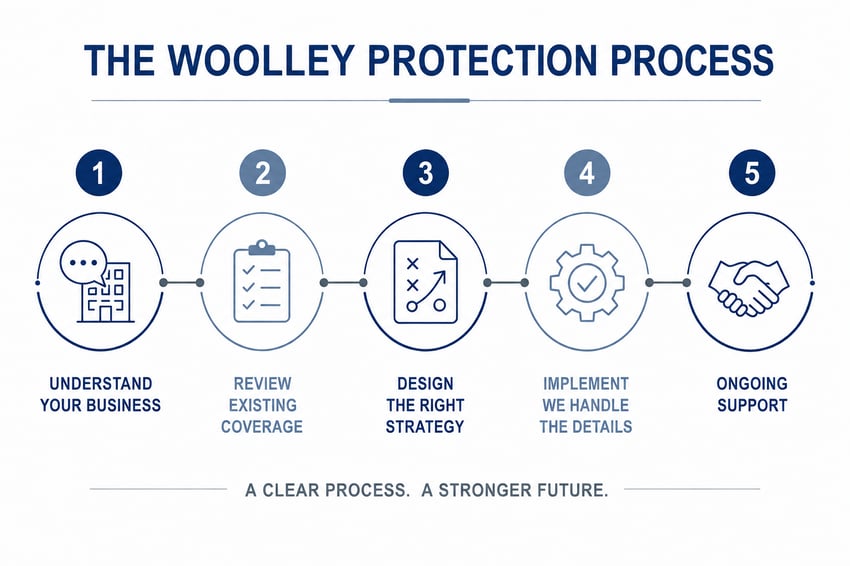
Before recommending any coverage, I first want to understand how your business operates and what you're trying to protect. Questions like these help determine the right strategy:
- Are you the only owner, or do you have partners?
- Is the coverage protecting a loan, a family, or the business itself?
- Should the business own the policy, or should you own it personally?
- Will the coverage need to change as debt decreases or the business grows?
- Should the coverage be temporary, permanent, or a combination of both?
- Is the coverage required by a lender, or is it protecting your own long-term goals?
Different answers lead to different solutions because they determine who owns the policy, who pays the premiums, who receives the death benefit, and how the coverage fits into your overall business strategy. That's why every recommendation begins with understanding your business, not recommending a product.
Once we understand your goals, we can design a life insurance strategy that fits your business, not someone else's.

ONE OF MANY REAL CLIENT STORIES
Protecting a Newly Acquired Manufacturing Company
How a layered life insurance strategy helped two business owners protect their families, their investment, and their future.

Two engineers had recently purchased an established carbon fiber manufacturing company. The purchase was complete, but one important question remained:
How do we protect everything we've just built?
Their responsibility extended beyond the business. They also needed to protect their families, employees, lenders, and each other.
The Challenge
Like many business owners, they quickly discovered that one life insurance policy couldn't solve every problem.
To acquire the business, they had personally borrowed against their homes to fund the down payment. They were also making payments under a long-term seller financing agreement. If either owner died unexpectedly, they wanted to make sure the surviving owner could continue operating the company without creating unnecessary financial hardship for either family.
Their priorities were clear. Because each objective required a different solution, a single policy wasn't enough. They needed a strategy that would:
- Pay off the personal loans, secured by their homes, that were used to fund the business down payment.
- Give the surviving owner the funds needed to buy the deceased partner's ownership interest.
- Ensure funds would be available to purchase the remaining ownership interest from one of the original owners, who agreed to stay with the company as a consultant.
- Protect each owner's family by replacing the income they depended on.
No single life insurance policy could accomplish all of those objectives.
The Solution
Instead of trying to solve every challenge with one policy, we designed a coordinated life insurance strategy with four separate layers of protection:
- Coverage to repay the loans secured by their homes.
- Buy-sell protection if either owner died unexpectedly.
- Business-owned coverage to purchase the remaining ownership interest from the minority owner if he passed away unexpectedly.
- Personal life insurance to help protect each owner's family.
We also matched portions of the coverage to debts that would decline over time. As those obligations disappeared, so did the unnecessary insurance, helping keep more money in the owners' pockets instead of paying for coverage they no longer needed.
The Result
The business owners didn't just leave with life insurance. They left with confidence, knowing every major financial risk had been addressed. From protecting their families and investment to preserving the future of the business.
If the unexpected happened, the surviving owner would have the financial resources needed to continue operating the company instead of being forced into difficult financial decisions during an already challenging time.
That's the difference between buying life insurance and designing a life insurance strategy.
Ready to Protect Your Business?
Whether you're buying a business, securing financing, planning for succession, or reviewing existing coverage, we'll help you design a strategy that's built around your business, not someone else's.
Let's start with a conversation.
Questions Business Owners Ask
How much life insurance does a business owner need?
There isn't a one-size-fits-all answer.
The right amount depends on what you're protecting, not just the size of your business.
When helping business owners determine the appropriate coverage, I look at questions like:
- Would your family lose your income?
- Do you have business or SBA loans that need to be repaid?
- Do you have a business partner who would need to purchase your ownership interest?
- Would your business suffer financially if you or another key person passed away?
- Have you personally guaranteed business debt or pledged personal assets?
Those answers determine not only how much life insurance you need, but also how it should be structured.
Sometimes one policy is enough. Other times it takes several policies working together. The goal isn't to buy the biggest policy, it's to protect your family, your business, and everything you've worked to build.
Can I use my existing life insurance instead of buying a new policy?
Absolutely. In many cases, your existing life insurance may already accomplish part, or even all of what you're trying to do.
Before recommending any new coverage, I first want to understand what you already have. Depending on the type of policy, the amount of coverage, who owns it, and why it was originally purchased, your existing life insurance may be able to protect a business loan, fund a buy-sell agreement, satisfy lender requirements, or continue protecting your family, depending on your goals.
In some situations, no changes are needed. In others, a policy can be reassigned, supplemented, converted, or integrated into a broader business life insurance strategy, rather than replaced.
The goal is to make the best use of the coverage you already own before recommending anything new.
Does an SBA loan require life insurance?
Often, but not always.
The amount of coverage, who owns the policy, and whether it's assigned to the lender can vary depending on the loan structure and the lender's requirements.
You shouldn't have to navigate lender requirements on your own. One of the things I often do is work directly with the lender on my client's behalf to review the insurance requirements and structure the coverage accordingly. Whether the lender requires life insurance, disability insurance, or both, my goal is to help satisfy those requirements while avoiding unnecessary coverage whenever possible.
Can life insurance help protect a business loan?
Yes, and in many cases, it should.
If a business owner dies unexpectedly, a loan doesn't disappear. Depending on how it's structured, the responsibility for repayment may fall on the business, a surviving business partner, or even the owner's family.
Life insurance can provide the funds needed to pay off or reduce that debt, helping the business continue operating without unnecessary financial strain.
Every loan is different, so before recommending coverage, I look at who is responsible for the debt, whether personal guarantees are involved, and what would happen if the unexpected occurred. The goal is to protect both the business and the people behind it.
Should I own the policy personally, or should the business own it?
It depends on what you're trying to protect.
The right ownership structure depends on the purpose of the coverage. In some situations, the business should own the policy. In others, personal ownership makes more sense. There are also cases where multiple policies with different owners are the best solution.
Before recommending who should own the policy, I look at the purpose of the coverage, who needs the death benefit, potential tax considerations, and the lender's requirements, if financing is involved.
The goal is to structure the coverage correctly from the beginning so it supports the purpose it was intended to serve.
What's the difference between Key Person and Buy-Sell insurance?
They protect two very different risks.
Buy-Sell Insurance, on the other hand, helps fund the purchase of a deceased owner's ownership interest. Instead of focusing on the business itself, it helps ensure ownership can transfer according to the buy-sell agreement without creating financial hardship for the surviving owners or the deceased owner's family.
Some businesses need one or the other. Others need both. The right approach depends on your ownership structure, the people involved, and what you're trying to protect.
Can my business pay the premiums of my life insurance policy?
Sometimes, but it depends on the purpose of the coverage and who owns the policy.
In some situations, the business pays the premiums. In others, the business owner pays them personally. The right approach depends on how the policy is structured, who owns it, and what the coverage is intended to accomplish.
Because policy ownership and premium payments can have legal and significant tax implications, I often work alongside a client's CPA or attorney, when appropriate, to help ensure the strategy is structured correctly.
The goal isn't simply deciding who writes the premium check. It's making sure the entire plan supports your business objectives as efficiently as possible.
What happens if my business partner dies unexpectedly?
Without a plan, it can create financial and operational challenges for everyone involved.
The surviving owner may suddenly find themselves sharing the business with a spouse or heirs who never intended to own it. At the same time, the deceased owner's family may inherit a valuable asset that produces little or no income, leaving both sides in a difficult position.
A properly funded buy-sell agreement can provide the funds needed to purchase the deceased owner's ownership interest, helping the surviving owner continue operating the business while ensuring the family receives fair value for what they've inherited.
While most business owners initially plan for death, it's also worth considering what would happen if an owner became permanently disabled. In many cases, that situation can create similar challenges, which is why it's a conversation I often encourage clients to have while we're planning.
The goal is to create a clear, well-funded transition plan before it's ever needed.
How can life insurance support a business succession plan?
Life insurance doesn't replace a succession plan, it can help fund one.
A well-designed succession plan often requires cash at exactly the moment a business is under the most financial stress. Depending on the situation, life insurance can provide the funds needed to purchase ownership interests, create liquidity for heirs, help repay business debt, or keep the business operating while ownership transitions.
The legal, tax, and operational planning typically involves an attorney and CPA. My role is helping design the life and disability insurance strategy that supports those plans and provides the funding needed when it's time to put them into action.
The goal is to make sure a good succession plan isn't limited by a lack of funding.
Can I still get life insurance if I have health problems?
Don't assume you won't qualify until you've explored your options.
I've worked with many business owners who thought they couldn't get life insurance because of a previous health condition or a past decline. In many cases, there were still options available.
Every insurance company evaluates health differently. A medical condition that isn't a good fit for one carrier may be viewed much more favorably by another. The key is finding the company that's best suited for your specific situation.
The goal is to understand your options before assuming the answer is no.
What You Can Expect
Running a business leaves very little extra time, and I understand that.
Some business owners prefer to meet in person. Others would rather handle everything through a few short phone calls and email. However you prefer to communicate, my goal is to make the process as efficient as possible while making sure your business, your family, and everything you've worked to build are properly protected.
You'll never be pressured into buying coverage you don't need. My job is to understand your goals, explain your options, and help you build a strategy that fits your business, not someone else's.
If you'd like to learn more about how I got started and the experiences that continue to shape the way I work with clients, you're welcome to read My Story.
Experience You Can Count On
- 17+ years helping families and business owners protect what matters most.
- 3,300+ clients served and more than 6,000 life insurance policies placed.
- 23 insurance companies to help find solutions tailored to each client's unique situation.
- Experience designing strategies for everything from straightforward family protection to complex business planning.

Kevin Woolley
Founder | Woolley & Woolley Insurance Group
Ready to Protect Your Business?
Whether you're buying a business, growing an existing company, planning for the future, or simply wondering if your current coverage is enough, I'd be happy to help.
Let's start with a conversation.